
Tag Archives: movies

Tag Archives: movies

How Filmmakers Use Moving Boxes, Empty Rooms, and New Homes as Symbolism

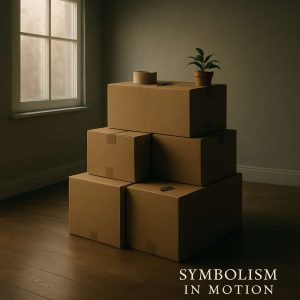
Filmmakers use spaces and objects to carry emotion because they’re universally understood. Boxes, empty rooms, and unfamiliar doorways say “change” without any dialogue. They represent tension possibilities and losses layered together, like a life mid-transition. Even NYC long distance movers are part of that visual shorthand, quietly dropping off boxes for distant relocations while a family steps into their next act of reinvention. Directors lean on these scenes because they’re relatable, loaded, and human, turning ordinary objects into a cinematic language for transformation.

Moving Boxes as a Measure of Transition

A cardboard box can say more about a character’s state of mind than dialogue. A half-packed box suggests hesitation. A stack of sealed boxes shows commitment. A single open box in the middle of a messy room can reveal someone who wants to leave but doesn’t know how.

Filmmakers use boxes to mark the in-between stage of life. Characters have not let go of the old place, but they have not stepped into the new one either. Boxes become a timeline. In early scenes, they sit untouched. Later, they are everywhere, cluttering the frame. Near the final act, the boxes vanish, replaced by a space that feels lived in or abandoned.

These choices let viewers track internal shifts without spelling them out. A person who keeps repacking and unpacking the same objects might be stuck. A character who throws items into boxes without sorting them might be running from something. The way someone handles their belongings becomes a window into their emotional landscape.

Empty Rooms and the Weight of Absence

An empty room can be a blunt visual. Something used to be here, and now it is gone. Filmmakers use emptiness to highlight what is missing: people, memories, or a version of life that no longer fits.

When a character stands in an empty room, the space often reflects their state of mind. A parent lingering in a child’s old bedroom shows a quiet grief with no words. A breakup scene in a nearly cleared apartment lets the silence speak. The stripped-down space pushes the eye toward the character’s face, making every expression feel heavier.

Empty rooms also change how sound works on screen. Footsteps echo. A dropped key rings louder than it should. This acoustic shift helps the viewer feel the absence. Directors use this to emphasize isolation or a sudden break from routine. When the familiar noise of daily life disappears, the emotional stakes become clearer.

Sometimes emptiness is not about loss but about possibility. A completely bare living room can signal a fresh start. The blankness invites the audience to imagine what might fill the space. But even then, there is usually a hint of uncertainty. A character might look around with hope or with fear. The room becomes a mirror for those mixed feelings.

New Homes and the Struggle to Belong

New homes in film often act as a testing ground. They are unfamiliar, and that makes them ideal for showing how characters adapt or resist change.

Filmmakers highlight the oddness of new spaces by focusing on small moments. The first night on an air mattress, the way light falls differently through unfamiliar windows, the awkward search for a light switch. These scenes underline how disoriented people feel when life shifts suddenly.

A new home can represent growth when characters slowly shape it into something that feels personal. A wall gets painted. A piece of furniture finds its place. These small acts show agency. They signal that someone is trying to belong. The transformation of the space tracks the character’s own evolution.

But new homes can also expose conflict. If someone refuses to unpack or avoids decorating, the space stays impersonal. That distance sends a clear message. The character is not ready to invest in their new reality. Filmmakers use these choices to build tension between characters who want different things. One is eager to settle, one is holding back.

When Symbolism Overlaps

Directors often combine boxes, emptiness, and fresh spaces to tell a fuller story. A room full of boxes hints at transition. The same room, empty later, shows the consequences of that transition. The following location, still unfamiliar and too clean, suggests the character has not yet found solid ground.

By moving through these stages, films create a rhythm of change. Viewers see what the character leaves behind, what they fear losing, and what they hope to build. The physical environment carries the emotional arc.

Why These Images Work

These symbols work because they are universal. You do not need context to understand why an empty room feels sad or why a new home feels uncertain. The objects are ordinary, but the emotions behind them are not. They show the push and pull between holding on and starting over. And they do it quietly, without speeches or dramatic gestures.

When filmmakers use these images well, they show that transitions are rarely clean. They are cluttered, unfinished, and often a bit lonely. But they also hold the first signs of growth. Boxes collapse, rooms refill, and unfamiliar spaces slowly become home.

Read More

Why Anime Movies Should Be Considered As Art?

Anime


Heroes such as Transformers, Spider-man, Wonder Woman, etc. including Pirates of the Caribbean are attracting a lot of attention this summer (the slump of “Power Rangers” is regretted behind that!). If you are in the area that is still showing, it is a big hole work that you should take a look at!

In Japanese movies, manga and anime-original movies such as “Gintama,” “My Heart Wants to Scream,” “Tokyo Gyo Deed,” and “Naruto,” which makes Naruto Clothing sales get record high, are in great shape. Anime movies have been a big hit with Pokémon breaking away from the low-flying of the last few years, and maniac routes such as “No Game No Life Zero” and “Theatrical Student Council Executives” have also been clean hits. It is also an interesting event that minions are gaining momentum over Disney in overseas animation.

However, it is also true that many beautiful movies are as beautiful as flowers blooming quietly in such a gorgeous corner. This time, we will introduce you to some of the most artistic anime movies.

The secrets of Brendan and Kells, directed by Irish talent Tom Moore

It is no exaggeration to say that it is located at the highest peak of entertainment in Japan, but in many countries overseas it is the same as it used to be divided into either family-friendly works or artistic works using anime. However, since Japanese anime such as Studio Ghibli’s works have become widely accepted overseas, it seems that the number of such “movies” itself, which is not suitable to simply divide into two for entertainment and art, is increasing recently.

Tom Moore’s the secrets of Brendan and kells, whose Irish film song of the sea Uta was well received in Japan, is the first. It’s also Moore’s memorable feature-length debut in 2009, a masterpiece that was nominated for the 82nd academy award for a best-animated feature film.

Set in 9th-century Ireland. As large-scale construction continues to create a wall surrounding the kells abbey in preparation for the invasion of the evil Vikings, a famous monk has fled Scotland with the book of kells.

The book of Kells, a gospel written by the biography of Matthew and Marco, and now known as the “Most Beautiful Book in the World,” is now a national treasure of Ireland, but this film depicts the adventures of Brendan, a boy ascetic monk, and Ashlyn, a fairy girl, to complete this holy book.

The feature of this work is that it is based on the drawing that makes use of the Celtic pattern of the Irish tradition after all, and especially the Celtic pattern is drawn in “book of kells” comes to life.

As well as song of the sea, Bruno Cre, and Ireland’s leading music group “Kila” are in charge, and the compositions and drawings that the soul of their home country is in full of the world match beautifully, bringing excitement.


ALSO READ: 12 Things That Makes Bar Movie Scenes Unrealistic


A short story, by Koji Yamamura, a talented man born in Japan, “A Dream with the Right and Left Eyes”

An artistic work that I would like to introduce from japan is “Koji Yamamura’s right eye and left eye dream,” which is nominated in the short animation category at the 75th academy award for “Head Mountain” in 2002 and shows nine short works by world-renowned animation artist Koji Yamamura, who has been a member of the academy of film and arts since last year.

To celebrate the 20th anniversary of the Toronto reel Asian film festival, “Zodiac 1/3” (1/3) produced by the Chinese zodiac sign considered 20 years as “1/3 lap” from 1 lap in 60 years (16/ first opening in theaters).

Some of these movies tried to reproduce the “color fantasy” of Canadian animation writer Norman McLaren, which can be said to be the backbone of “McLaren’s Workshop,” with abstract painter Sanae on a longitudinal screen as a tribute to the American contemporary composer George crumb, Satie’s “water dream (1 proboscis) (1) (17/ first theater) which expresses the evolution from the birth of life in the sea to whales with music and video is an animated reproduction of the ballet music “paradox” composed by French composer Eric Satie as a surreal ballet image.

A total of 54 minutes for all nine works, and a collection of works that satirizes the heart in a truly easy-to-see but blissful time. Young people who are aiming to produce anime should also be sure to see it. I was fascinated by “Kojiki Hidako Hen,” and next I wanted to see “Kojiki” movies in feature films (or rather, I would like director Yamamura to participate in commercial-based animation films once!).

Documentary and animation artist
Hiroyuki Matsumoto’s two ambitious films

Director Hiroyuki Matsumoto of the exploration documentary “Jomon and Pacer Voyage” (currently showing at Shimokitazawa trim wood), which recorded the adventure of carrying out a four-year voyage from Indonesia to Okinawa in a handmade canoe and has been released all over the country since it was released in 2015.

He is also a director Matsumoto of and an animation artist, and two short films that he worked on are currently being screened in Shimokitazawa trim wood, Tokyo.

“In Goya Hoboken” (11/22 minutes) is a live-action animation of a boy and a dog learning and growing up on the importance of others in the ocean, with a flat doll on the glass. Snoopy fights with the kennel as a fighter, but this dog and boy travel instead of a boat with the kennel upside down, but
there is something that is somewhat smiley.

“Kioku Kiroku Now” (15/18 minutes) covers the testimony of the atomic bomb in Nagasaki by 95-year-old sister has Nishiguchi and has more than 1,000 consecutive photographs taken at that time Torres and draw pictures by more than 1,000 men and women of all ages in our city, Nagasaki prefecture (that is, citizens become an animator!). It is a miraculously beautiful and noble work that could have been done in the project of making the interview scenery and animation together (the movie can see both the production scenery document and the animation).

Two films full of experimental motivation were released until Friday, August 11, but the screening will be extended. The following dates are Saturday, August 12, Friday, August 18, Saturday, 19, Saturday, September 26, and Friday, September 1, so please watch it as soon as possible!

Ballerina, a 3d movie
that develops a girl’s dream

Finally, it’s a bonus, but we will also introduce the family anime movie “Ballerina” made by a French and Canadian joint work.

Set in Paris at the end of the 19th century, the world view that was often seen in Japanese girls’ manga, etc. Will be brilliantly and happily presented in 3d, where girls who grew up in the facility escaped from the facility to realize their dream of dancing as etoiles at the opera, entered ballet schools at the end of twists and turns and started intense training.

It is a work that will be a work that will develop future dreams while being pleased when a little girl sees it, so please take it with you.

There are various forms of animation in various forms around the world like this, but these artistic tastes are actually included as elements of entertainment, and in that sense, art, moe, family, adults, simple things, esoteric things, equally “enjoy” if you even face it with your heart, everything will be able to become entertainment.

May all animated films open the door to the hearts of the audience!


Read More

What Wrist Watches Seen In Interstellar Movie

Talented actor Matthew McConaughey stars at Interstellar (2014) in which he performs Cooper. He also leads a group of explorers into some recently found wormhole to transcend the constraints of human space travel and defeat the huge distances involved in an interstellar vessel to conserve humankind.

The film was fascinating with a high cinematic setting and it is highly recommended. Additionally, it is fairly rare that people see as much screen time provided to your watch that’s the movie’s character. Producers of Interstellar really approached Hamilton to provide them both watches, like Fitbit watches (and you may read Fitbit reviews), also you visit Matthew McConaughey sporting the Hamilton Khaki Pilot Day Date H64615135 on his wrist that’s offered from the recent Hamilton’s view collection.

Even the Hamilton Khaki Pilot Day includes a 42mm stainless steel case with a matching stainless steel necklace exactly like the one from the film. It is available in a black dial using all silver-tone palms and sticks markers that are luminescent. The present display is at 6 o’clock position while the afternoon of the week has been displayed in the 12 o’clock position. Lug diameter is 20mm for people seeking to alter the strap and it is also water-resistant to 100 meters.

The next watch is also called the ‘Murph Watch’ that is worn with Murph (Murphy) Cooper played with youthful Mackenzie Foy and afterward by Jessica Chastain. This view has a significant part in the film (spoilers ahead) in which her daddy communicates to her Morse code through the moment’s hands in the watch. It can be custom made view solely for the film that’s unavailable commercially. It is a modified Hamilton Khaki Automatic.

It is available in a stainless steel case with sewing and a black leather band. This is exceptional in the sense it does not possess a date window onto the dial in which all Hamilton Khakis really does. The hands seem quite much like this Hamilton Khaki Team Earth in which it’s a vintage-looking lume.


Read More

𐌢